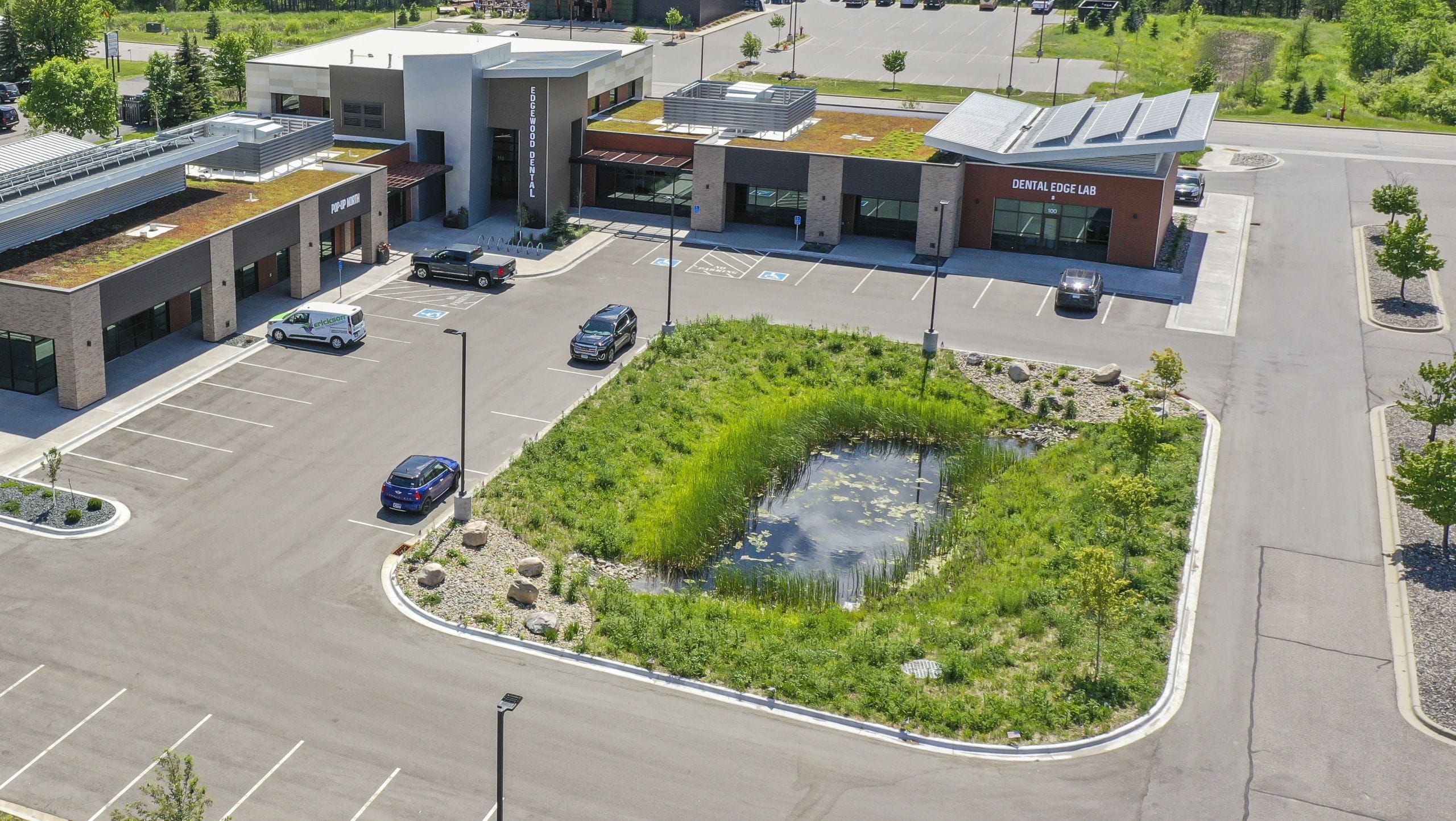
In Minnesota, any city designated as a Municipal Separate Storm Sewer System (MS4) by the MPCA is required to implement and oversee a stormwater pollution prevention program, the purpose of which is to minimize the discharge of pollutants from the city’s storm sewer system into nearby waterways. As part of the requirement, cities must develop and maintain a Best Management Practices (BMP) inspection program for stormwater runoff controls. This mandate generally applies to Minnesota cities with a population of 10,000 or more, as well as cities of at least 5,000 that discharge to specially classified bodies of water, according to the MPCA.
The inspection requirement pertains to private businesses as well as public entities. Owners of property with stormwater BMPs in place are required to inspect and maintain them on a regular basis.
Permanent BMPs are man-made features that control stormwater runoff and keep pollutants out of natural waterways. Examples include:
- Dry Ponds: low, grassy areas made to temporarily hold stormwater while the sediment and pollutants settle out.
- Wet Ponds: small bodies of water that use plant life and surrounding wetlands as their filter.
- Constructed Wetlands: shallow marshes that treat and filter through their system of vegetation.
- Underground Sedimentation Practices: any process that uses underground natural resources to treat runoff, with systems that separate and collect solids.
- Infiltration Basins and Trenches: permeable soil and thick vegetation that gather and temporarily store runoff. Trenches are narrow, typically three to six feet deep, and use stone aggregate.
- Filter Strips and Swales: vegetated areas that traditionally use grass to settle pollutants, typically found near roads and parking lots.
- Filtration Practices: underground layer of material such as clay soil that prevent stormwater runoff from polluting groundwater.
- Bioretention/Rain Gardens: practices that rely on the environment’s physical, biological, and chemical properties to catch and decrease stormwater runoff.
- Permeable Pavement: layers of pavement that vary in thickness and material to capture sediments and pollutants in runoff.
These are common permanent BMPs found in Minnesota cities and on commercial properties that may need an inspection and maintenance program put in place.
Widseth has ample experience in designing, maintaining, and inspecting stormwater BMPs. Our process involves performing the on-site inspection and preparing the after-site-inspection report. During the on-site inspection, we photograph the current BMPs, as well as document their conditions and performance through detailed notes. In the after-site-inspection report, we will recommend maintenance activities and frequency, as well as identify deficiencies and recommend corrective measures. Once this is finished, we will assist in preparing the documentation for submission to the appropriate regulatory agency.
For many Minnesota cities, the deadline for inspection programs is approaching. Contact Widseth for more information on our stormwater BMP inspection and maintenance services.