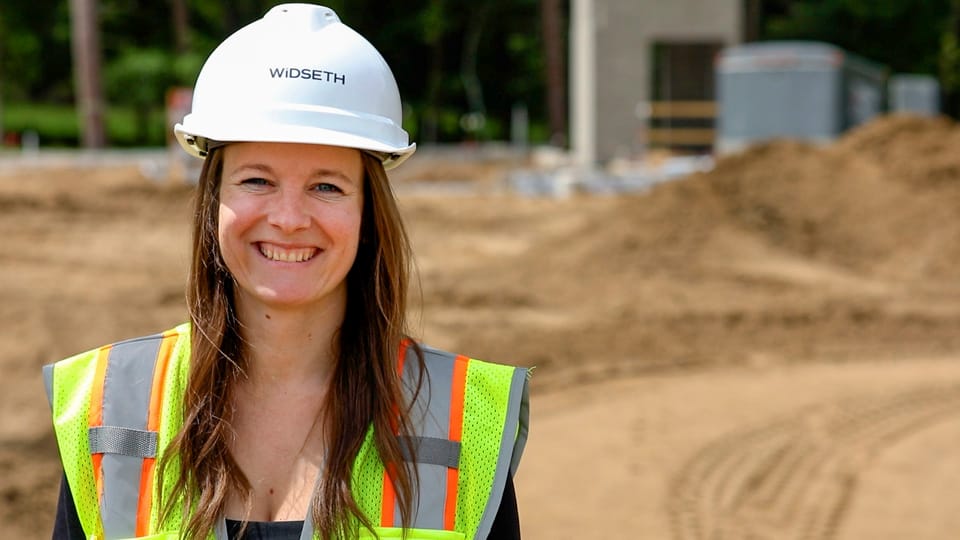
After years of planning, design, collaboration, and anticipation, the National Loon Center is officially rising from the ground in Crosslake, Minnesota.
Seeing construction underway marks an exciting milestone in a project that has been years in the making. Foundations are in place, underground utilities are being installed, and the vision for this one-of-a-kind destination is becoming reality.
In the video below, design architect Ashley Martel shares a behind-the-scenes look at what’s happening on site and highlights several innovative features of the National Loon Center.
Among the project’s most notable features is its use of cross-laminated timber (CLT), a sustainable engineered wood product that allows large wall panels to be prefabricated and assembled quickly once they arrive on site. Combined with exposed glulam beams, the building’s structural system creates a warm, natural aesthetic.
Additional sustainable features include geothermal wells to provide efficient heating and cooling, and solar canopies in the parking area to generate renewable energy. The canopies were also designed with the loon in mind—their angled forms will resemble its wings.
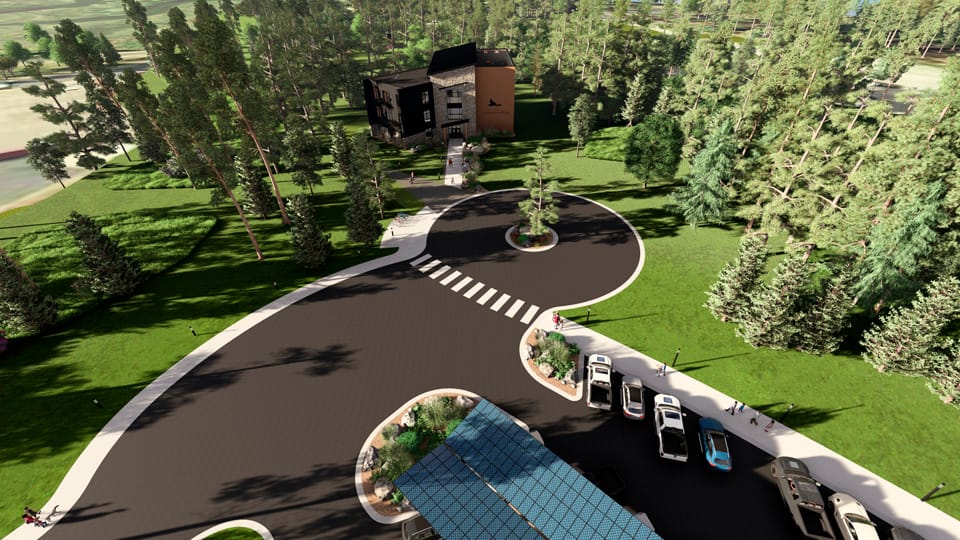
Concept rendering by Widseth.
Another unique feature of the project is the site design. The entire layout has been designed to resemble a loon when viewed from above. The parking area forms the body, the solar canopies become the wings, the roundabout creates the head, and the beak is the walkway toward the entrance. At the center of the roundabout visitors will find a landscaped island inspired by Minnesota’s lakes.
Every detail reflects the National Loon Center’s mission of connecting people with one of Minnesota’s most iconic birds through education, conservation, and immersive experiences.
We’re proud to have been part of this project from its early planning stages and are thrilled to see construction advancing. You can keep track of the progress by viewing the onsite camera. It’s rewarding to watch years of collaboration transform into a landmark that will serve visitors, researchers, educators, conservation partners, and communities across the country for generations to come.