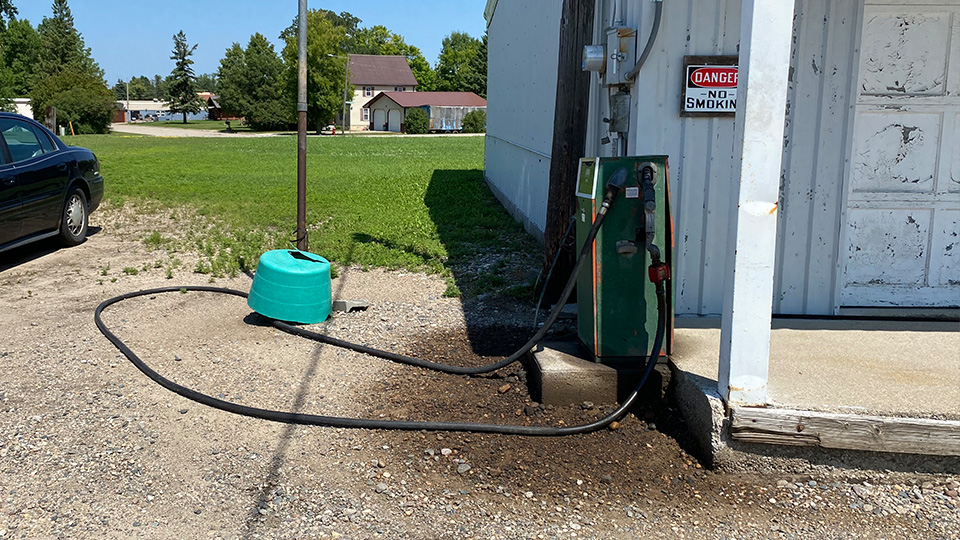
An on-site inspection confirmed potential contamination during an ESA.
An Environmental Site Assessment (ESA) is an important component of commercial development due diligence and is often required by lenders before financing can be approved. Conducting an ESA early helps developers identify potential environmental liabilities and make informed decisions before purchasing or developing property.
A Phase I ESA is the first step in the process. Environmental professionals review historical records, aerial photographs, regulatory databases, and past land uses to identify potential environmental concerns, such as contamination from former site activities. This research helps developers understand risks that could affect project costs, timelines, or future property use.
After the records review, environmental professionals conduct an on-site inspection to evaluate current conditions and verify findings from the historical research. The site visit can reveal evidence of environmental concerns that may not appear in existing records.
If potential issues are identified, a Phase II ESA may be recommended to collect and analyze soil, groundwater, or other environmental samples. This additional investigation helps determine whether contamination is present and what steps may be needed to address it.
At Widseth, our environmental professionals guide clients through every stage of the ESA process, helping developers, property owners, and lenders evaluate risks and move projects forward with confidence.